
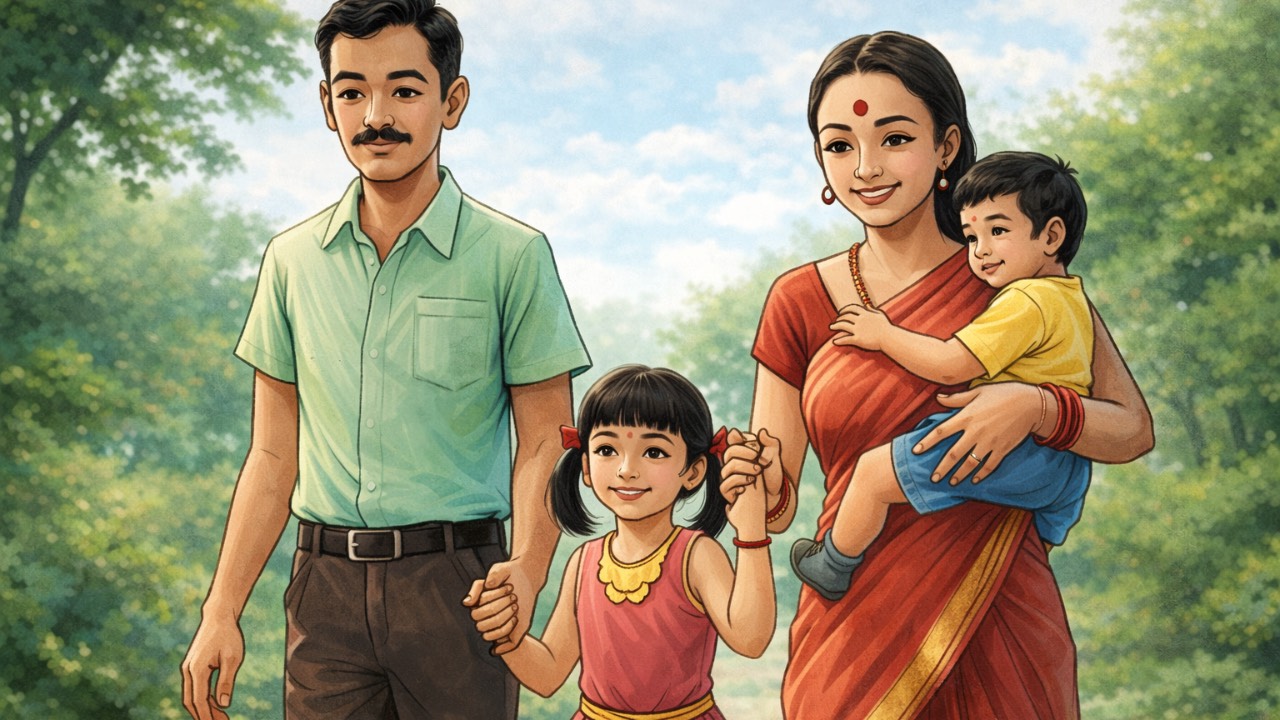
The KUSAC Method
Bridging the Gap Between Traditional Values and Digital Challenges
In my thirty five years of military leadership and raising my own family across four countries, I have learned a fundamental truth. Rules without connection lead to rebellion. For multicultural families today, especially those within the Nepalese and Gurkha diaspora, the gap between our traditional values and the digital modern world can feel like an impossible chasm.
You watch your child glued to a screen whilst grandparents share stories in the mother tongue that go unheard. You enforce discipline the way you were raised, only to face defiance you never dared show your own parents. You feel caught between honouring your heritage and preparing your children for a world that seems to reject everything you hold sacred.
The secret is not found in stricter discipline. It is found in a shift of Knowledge and Understanding.
The KUSAC Method is not another parenting technique imported from Western psychology books. It is a framework born from lived experience—navigating between Nepali values of respect and Western values of independence, between military precision and parental compassion, between the village upbringing we knew and the digital childhood our children inhabit.
The Philosophy: Be, Do, Have
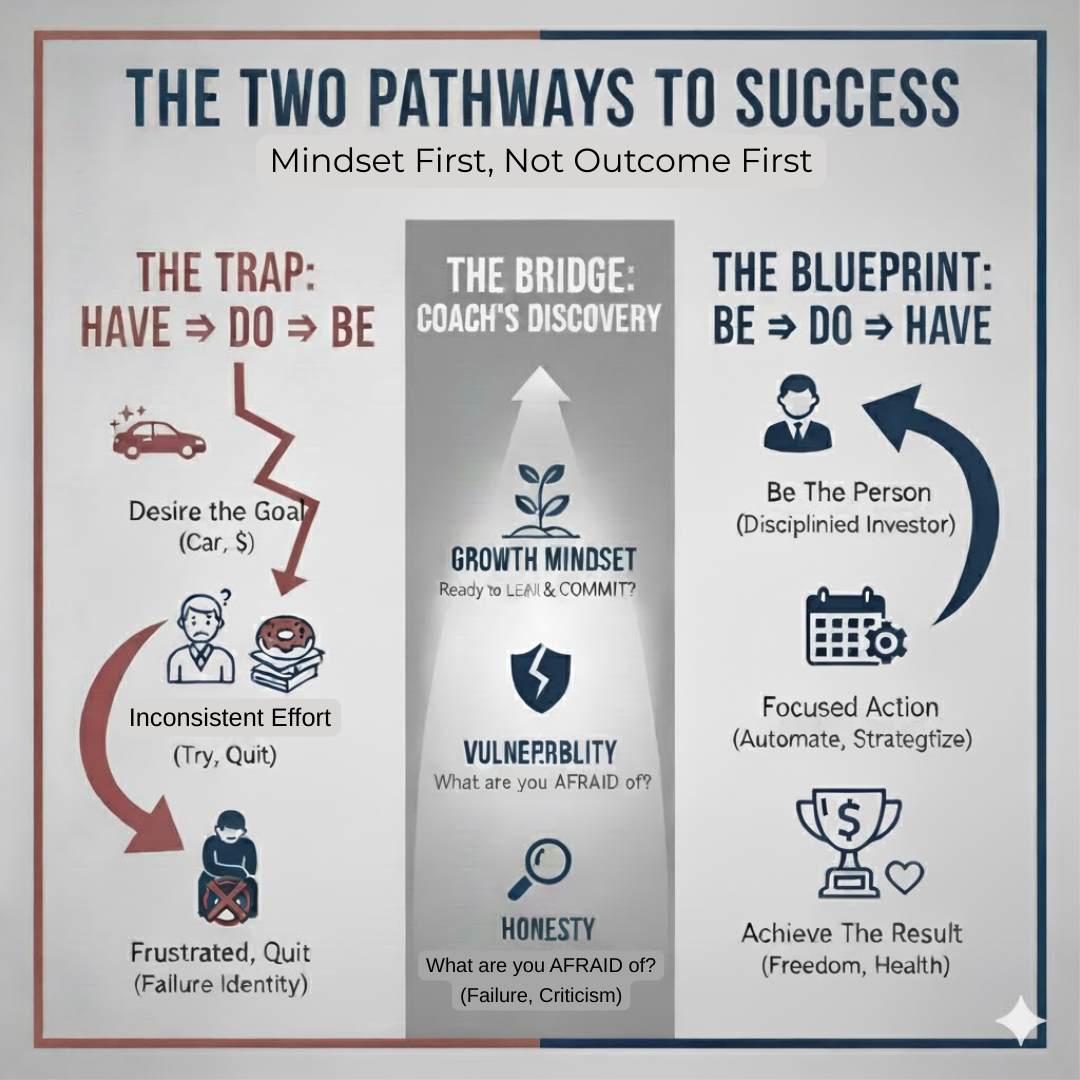
Many parents focus solely on the result. They want their children to Have better grades or Have less screen time. At Growth Empower, we reverse this instinct. We coach parents to help their children Become the person of character through intentional Action, ensuring that the results follow naturally.
This is not a new concept. Your grandparents understood this intuitively. They did not lecture children about honesty—they became honest people. They did not demand respect—they demonstrated respectful behaviour daily. The character was formed through observation and repetition, not punishment and reward charts.
But in today's world, where children consume thousands of messages daily from screens, peers, and social media, intentional character formation requires more than osmosis. It requires a strategic framework.
Here is how Be-Do-Have works in practice:
Traditional approach: "I want my child to Have good grades, so I will force them to study for two hours every night."
Result: Resistance, arguments, dependency on your enforcement, and no internal motivation.
KUSAC approach: "I want my child to Become a curious learner who values knowledge, so I will Do actions that model curiosity—asking questions at dinner, reading myself, showing excitement about learning new things."
Result: Over time, they internalize that identity. Good grades naturally follow because they are a learner, not because you forced compliance.
This shift—from controlling outcomes to cultivating identity—is the foundation of everything we teach at Growth Empower.
- Knowledge: Gaining insight into how digital platforms affect a child's development. Understanding that a child's brain is not "lazy" when they struggle to focus—it is overstimulated by dopamine-driven apps designed by billion-pound companies to be addictive. Knowledge removes judgement and creates compassion.
- Understanding: Empathising with the "why" behind their behaviour. When your son refuses to speak Nepali at home, it is not disrespect—it is a child navigating the painful reality of feeling "different" at school. Understanding allows you to address the root cause (belonging anxiety) rather than the symptom (language refusal).
- Skills: Equipping ourselves with modern communication tools. The command-and-control style that worked in military hierarchies does not work with children raised in democratic classrooms. You need new skills: active listening, collaborative problem-solving, emotion coaching. These are not Western inventions—they are timeless human connection skills adapted for modern family structures.
- Attitude: Cultivating a growth mindset for resilience. When you believe "My child is disrespectful," you create a fixed narrative. When you believe "My child is learning how to regulate emotions in a confusing world," you create space for growth. Your attitude—towards yourself, your partner, your children—determines whether challenges become crises or opportunities.
- Courage: Finding the commitment to take incremental steps forward. It takes courage to parent differently than you were parented. Courage to set boundaries your parents never set. Courage to apologise to your child when you lose your temper. Courage to be imperfect in front of your community. This is not weakness—this is the bravery required to break generational cycles whilst honouring generational wisdom.
Each pillar builds on the previous one. You cannot have Understanding without Knowledge. You cannot apply Skills without the right Attitude. And none of it matters without the Courage to actually implement change when it feels uncomfortable.
The VIAR Catalyst for Change
Understanding KUSAC is one thing. Living it daily is another. This is where the VIAR process becomes your practical roadmap.
Vision (V): What kind of home do you want to create? Not in vague terms like "a happy family," but in specific, lived reality. Close your eyes. Picture your home five years from now. What does dinnertime look like? How do your children speak to each other? How do they handle disappointment? How do you and your partner resolve conflict? This clarity becomes your North Star when daily chaos threatens to pull you off course.
For many Nepalese and Gurkha families, the vision includes elements others might not understand: children who can navigate both cultures fluently, who respect elders whilst thinking independently, who carry forward ancestral resilience whilst building new opportunities. Your vision is allowed to be both/and, not either/or.
Intent (I): Vision without intent remains fantasy. Intent is the decision—renewed daily—to move towards that vision even when it is difficult. It is choosing connection over convenience when you are exhausted. It is choosing to repair after an argument even when pride whispers "Let them come to you first." Intent is intrinsic motivation made tangible through daily choices.
Here is a powerful question: What is your intent behind the rules you set? If the honest answer is "Because that is how I was raised" or "Because I am the parent," that is authority-based parenting. If your intent is "Because I want to teach them self-discipline that will serve them when I am not there to enforce it," that is principle-based parenting. Same rule, completely different outcome.
Attention (A): Where you place your attention determines what grows in your family. If you only notice misbehaviour, you will see more of it. If you intentionally notice moments of kindness, responsibility, or courage—and name them out loud—you will see more of those too.
Attention is also about presence. Your child does not need an hour of your distracted time whilst you scroll through your phone. They need 10 minutes of your undivided attention—eye contact, curiosity, no agenda except connection. This is how trust is built. This is how children learn they matter.
For working parents, especially those balancing multiple jobs or shift work common in Gurkha families, this feels impossible. But attention is about quality, not quantity. Five minutes of true presence before school. Ten minutes at bedtime with phones in another room. These micro-moments accumulate into secure attachment.
Repetition (R): Neuroscience is clear: repetition rewires the brain. One conversation about screen time changes nothing. One week of a new bedtime routine changes little. But three weeks of consistent repetition? The brain begins to form new pathways. Three months? New habits solidify. Three years? You have transformed family culture.
This is where many parents give up. They try something for three days, see no change, and conclude "It does not work for my child." But you are not training a dog—you are reshaping neural pathways and breaking generational patterns. That takes time.
Repetition also applies to repair. The first time you apologise to your child after losing your temper, it feels awkward. The tenth time, it feels normal. The fiftieth time, your child internalizes that mistakes do not define relationships—repair does. This becomes their template for all future relationships.
VIAR is not a one-time exercise. It is a cycle you return to again and again as your children grow, as circumstances change, as new challenges emerge. Vision evolves. Intent gets recommitted. Attention shifts focus. Repetition builds new skills.
Where Culture and Modern Parenting Meet
The beauty of the KUSAC Method is that it does not ask you to choose between your heritage and your children's future. It asks you to be the bridge.
Your parents raised you with the values of discipline, respect, sacrifice, and family loyalty. These are not outdated—they are the foundation of resilience. But the methods they used—fear-based compliance, emotional distance, unquestioned obedience—these do not translate to children growing up in societies that value independence, emotional expression, and critical thinking.
KUSAC gives you a way to preserve the values whilst updating the methods.
Traditional value: Respect for elders.
Old method: "Do not question your elders."
KUSAC method: "We show respect by listening carefully, considering their wisdom, and asking thoughtful questions to understand their perspective better."
Traditional value: Hard work and perseverance.
Old method: "Study until midnight or you will bring shame to this family."
KUSAC method: "Let us create a study plan that respects your learning style and allows rest, because sustainable effort creates better results than exhausted cramming."
Traditional value: Family comes first.
Old method: "Your needs do not matter—family obligation is everything."
KUSAC method: "We support each other because we genuinely care, and that includes making sure everyone's wellbeing is considered, not just demanded."
Do you see the difference? Same core value. Completely different execution. One creates resentment and eventual rebellion. The other creates genuine character and chosen loyalty.
Raising confident and resilient children does not require abandoning your heritage. It requires using the strength of your values to guide them through the modern world with competence and clarity.
Your children can honour their grandparents and think independently. They can value hard work and protect their mental health. They can be proud of their Nepali identity and thrive in British society. These are not contradictions—they are the lived reality of successful multicultural families who refuse to see culture as binary.
The Transformation Begins with You
The KUSAC Method starts with one uncomfortable truth: you cannot give your children what you do not possess yourself.
If you want them to manage emotions well, you must learn to manage your own first. If you want them to communicate respectfully, you must model it in your marriage. If you want them to bridge cultures confidently, you must do the internal work of integrating your own identity.
This is why Growth Empower coaching is not just about "fixing" your children's behaviour. It is about empowering you—the parent—to become the leader your family needs. The coach. The guide. The safe harbour in the storm.
When you shift from reacting to responding, from controlling to coaching, from enforcing to empowering, everything changes. Not overnight. But steadily, measurably, permanently.
Take the First Step
If you are ready to transform your family dynamics—not by abandoning your values but by renewing your methods—let us start with a conversation.
The KUSAC Method is not theory. It is the framework I used to raise three confident, culturally grounded children across multiple countries and school systems. It is the framework hundreds of families are now using to bridge the gap between heritage and modernity.
You do not have to navigate this alone.
Book a Discovery Call →View Online Courses →
Explore the Peaceful Sleep Kickstart Course →
Get Your FREE Parenting Peace Toolkit!
Tired of daily battles with your kids? Get instant access to our proven 5-step system that transforms chaos into calm. Includes ready-to-use scripts for bedtime, morning routines, sibling fights, and more - plus bonus quick-fix strategies that work even when you're exhausted.
What's Included: ✓ 5 proven solutions for common parenting battles
✓ Word-for-word scripts that actually work
✓ Quick calm-down techniques for overwhelmed moments
✓ Bonus: Emergency reset strategies for tough days
Join our growing community of parents building more peaceful homes
We hate SPAM. We will never sell your information, for any reason.
