
Stop the Meltdown: One Hand, Three Games, Lifelong Peace
Master Your Family's Emotions with the Brain Hand Model
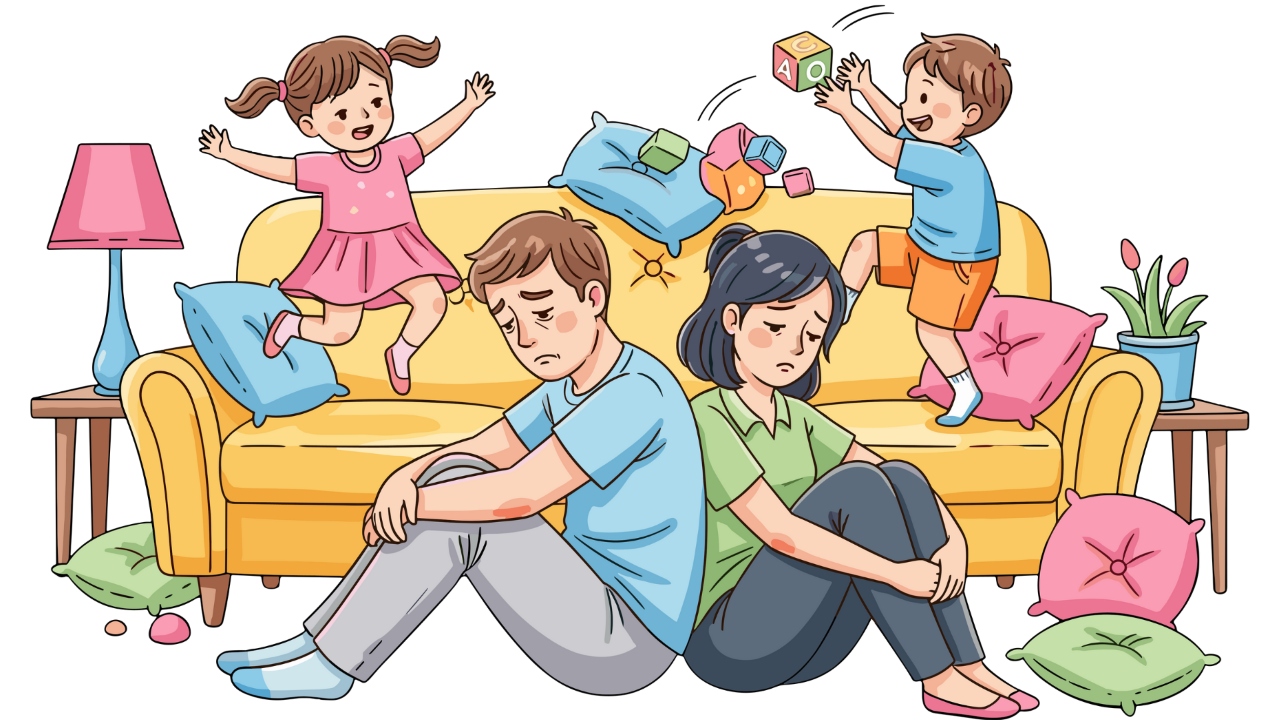
Your child throws toys. Your partner slams doors. You snap at colleagues. Sound familiar?
What if I told you that one simple hand gesture could transform how your entire family handles big emotions? Not tomorrow. Not after months of therapy. Starting tonight, at bedtime.
Welcome to the Brain Hand Model—a tool so powerful, families across 40 countries are using it to turn daily meltdowns into moments of connection.
The Problem We All Face
Picture this: Your six-year-old refuses to brush teeth. Screaming erupts. You have tried reasoning, bribing, threatening. Nothing works. You feel helpless, frustrated, perhaps even ashamed.
Or this: Your partner comes home tense. One misplaced comment, and suddenly you are in a full argument about something that happened three years ago.
Here is the truth nobody tells you: These are not bad behaviour problems. They are brain problems. And once you understand how the brain works, you hold the key to solving them.
Your Brain in Your Hand: The Model That Changes Everything
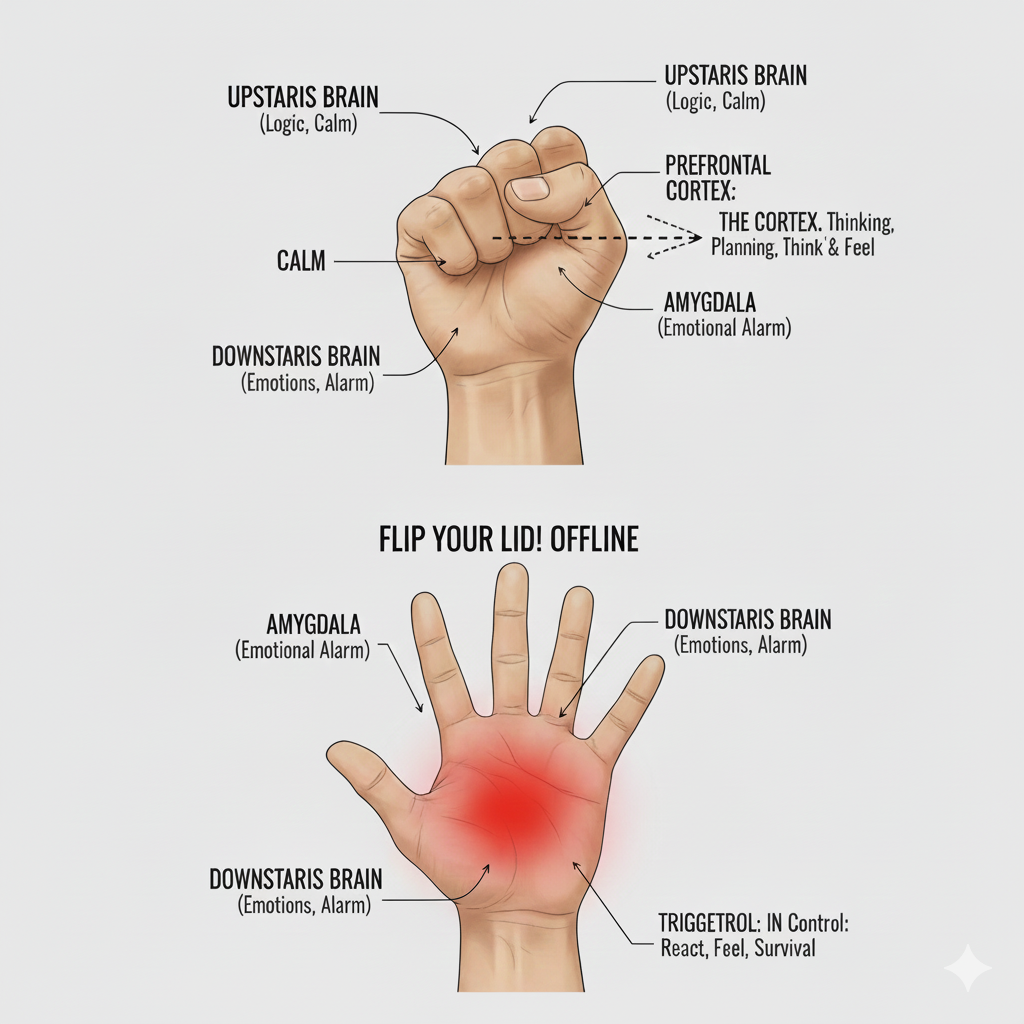
Hold up your hand right now. Seriously, do it.
- Step 1: Tuck your thumb into your palm.
- Step 2: Fold your fingers down over your thumb.
- Step 3: You have just built a brain.
Understanding Your Brain Hand
Your Palm (Inside): This is your Survival Brain—breathing, heartbeat, fight or flight.
Your Thumb (Tucked Inside): This is your Feeling Brain—where fear, joy, anger, and love live. Think of it as your brain's smoke detector, constantly scanning: "Am I safe? Am I loved? Am I in danger?"
Your Fingers (Folded Over): This is your Thinking Brain—logic, empathy, problem-solving, wisdom.
When life feels calm, your fingers stay connected to your thumb. Your Thinking Brain guides your Feeling Brain. You make wise choices.
The Flip: When Everything Falls Apart
Now, open your fist. Lift your fingers straight up.
This is what happens when someone "loses it."
The Thinking Brain disconnects from the Feeling Brain. The smoke detector screams "DANGER!" Your child cannot hear reason. Your partner cannot see your perspective. You cannot think clearly.
This is not weakness. This is not poor character. This is neuroscience.
Your loved one has not chosen to be difficult. Their brain has literally flipped its lid.
Why This Changes Everything
Once you understand "the flip," three things happen:
- Compassion Replaces Judgement: You stop thinking "Why are they being so impossible?" and start thinking "Their Thinking Brain is offline. They need help reconnecting."
- Strategy Replaces Struggle: You stop trying to reason with someone mid-flip (impossible) and focus on helping them calm down first (effective).
- Connection Replaces Control: You build trust by being the calm anchor, not the frustrated force.
The Three Games That Build Lasting Emotional Strength
Forget quick fixes. These games rewire brains—yours, your children's, your partner's. Play them consistently, and watch relationships transform.
Game 1: Emotion Detective (5 Minutes Daily)
What It Does: Teaches everyone to spot the "rumble" before the "flip."
How to Play:
At bedtime, ask your child:
- "What feelings did you have today?"
- "Where did you feel them in your body?"
Help them expand beyond "happy" or "mad":
- Was it frustrated, disappointed, excited, worried, proud?
Point to body signals:
- Tight tummy = nervous
- Hot face = embarrassed
- Racing heart = excited or scared
With Your Partner:
"I notice my shoulders are tight. I think I am feeling overwhelmed, not angry at you."
The Power: When you can name it, you can tame it.
"Name the feeling, find the feeling, tame the feeling."
Game 2: Rewind and Repair (Every Time There's a Flip)
What It Does: Turns conflicts into connection. Rebuilds trust after every meltdown.
How to Play:
After everyone calms down (wait 20 minutes minimum), sit together:
- Step 1 - Acknowledge: "My Thinking Brain went away. I shouted, and that was not kind."
- Step 2 - Listen: "How did that make you feel?"
- Step 3 - Reconnect: "I love you. We are safe together. Can we try again?"
With Your Child:
"Your smoke detector went off when I said 'no sweets.' You threw your cup. That hurt Mummy's feelings. What can we do differently next time?"
With Your Partner:
"I heard you say you felt ignored when I checked my phone. You are right. I am sorry. You matter more than that email."
The Power: Every repair strengthens the relationship. Every ignored rupture weakens it.
"Connection before correction, always."
Game 3: Wise Owl Choices (Before Problems Happen)
What It Does: Builds the Thinking Brain muscle. Prevents flips before they start.
How to Play:
The Pause Question:
Before reacting, ask: "What will happen if I choose this?"
Practice at Calm Times:
"Tomorrow, if your sister takes your toy, what are your choices?"
- Grab it back (What happens? Sister cries, I get in trouble)
- Ask her to swap (What happens? Maybe she says yes, maybe we play together)
- Tell an adult (What happens? An adult helps us solve it fairly)
Create If/Then Plans:
"IF I feel my lid starting to flip, THEN I will take three deep breaths and count to ten."
With Your Partner:
"We have three choices about this money problem. Let us look at each one's consequences together."
The Power: Every pause strengthens the connection between Thinking Brain and Feeling Brain.
"Pause, predict, choose wisely."
How Often Should You Practice?
Think of these as emotional workouts. The brain needs repetition to build new pathways.
- Daily: Emotion Detective at bedtime (5 minutes); Name feelings as they arise during the day
- As Needed: Rewind and Repair after every flip (20 minutes); Wise Owl Choices before known trigger situations
- Weekly: Family meeting: "What made lids flip this week? How did we put them back on?"
The Timeline:
- Week 1-2: Everyone learns the hand model and language
- Week 3-4: You start noticing flips happening
- Week 5-8: Family starts naming feelings and choosing repairs
- Month 3+: Fewer flips, faster recoveries, deeper connection
Consistency matters more than perfection. One repair is better than none. One pause is better than an explosion.
Making This Work for Your Global Family
For ESL Families:
- Show the hand model, do not just describe it
- Practice the key phrases in both languages
- Draw simple pictures: calm brain (closed fist), flipped brain (open hand)
- Role-play the games—actions speak louder than words
Cultural Adaptation:
In some cultures, open emotional expression feels uncomfortable. That is fine. Start with:
- "My body feels different. What does yours feel like?"
- "I need a pause to think clearly."
- Repair can be quiet—a gentle touch, sitting together, shared tea
For Multicultural Homes:
Honour different emotional traditions whilst building new ones:
- "Grandma taught me to stay quiet when upset. I am learning another way that also works."
- Blend heritage wisdom with brain science
Your Starting Point Tonight
Before Bed Tonight:
- Show your child your hand. Build a brain together.
- Explain: "Sometimes our Thinking Brain and Feeling Brain disconnect. It is normal. We can learn to reconnect."
- Play Emotion Detective: "What feeling did you have today? Where did you feel it?"
This Weekend:
- Teach your partner the hand model.
- Create your family's If/Then plan: "If lids flip, we take space, then repair."
- Practice Wise Owl Choices with a pretend scenario.
This Month:
- Notice when your own lid flips. Name it: "My Thinking Brain just went offline."
- Model repair. Your children learn more from watching you fix mistakes than from watching you be perfect.
- Celebrate small wins: "You used your words instead of hitting. Your Thinking Brain stayed connected!"
The Promise
You cannot prevent every meltdown. Life will always trigger smoke detectors.
But you can transform how your family recovers. You can turn tantrums into teaching moments. Arguments into deeper understanding. Chaos into connection.
One hand. Three games. Lifelong peace.
The brain in your hand holds the power. What will you do with it tonight?
During a Flip:
- "I can see your Thinking Brain has gone away. Let us help it come back."
- "My lid just flipped. I need three deep breaths."
- "Connection before correction, always."
- "Let us rewind and repair this together."
- "Name the feeling, find the feeling, tame the feeling."
- "Pause, predict, choose wisely."
- "We are learning together. Brains can change. Relationships can heal."
Ready to Transform Your Family Dynamics?
The Brain Hand Model is just one of the powerful frameworks we teach at Growth Empower. If you are ready to bridge heritage wisdom with modern parenting strategies, let us start with a conversation.
Book a Discovery Call →Explore Our Courses →
Helping multicultural families build resilience, connection, and confidence—one brain flip at a time.
Get Your FREE Parenting Peace Toolkit!
Tired of daily battles with your kids? Get instant access to our proven 5-step system that transforms chaos into calm. Includes ready-to-use scripts for bedtime, morning routines, sibling fights, and more - plus bonus quick-fix strategies that work even when you're exhausted.
What's Included: ✓ 5 proven solutions for common parenting battles
✓ Word-for-word scripts that actually work
✓ Quick calm-down techniques for overwhelmed moments
✓ Bonus: Emergency reset strategies for tough days
Join our growing community of parents building more peaceful homes
We hate SPAM. We will never sell your information, for any reason.
